

Guide to Detailing Millwork & Cabinetry in AutoCAD + Free DWG
02/12/2025
Master AutoCAD Door Swings with Dynamic Blocks + Free DWG
04/12/2025
How to Draw Waterproof Wall Sections in AutoCAD + (Free DWG Download)
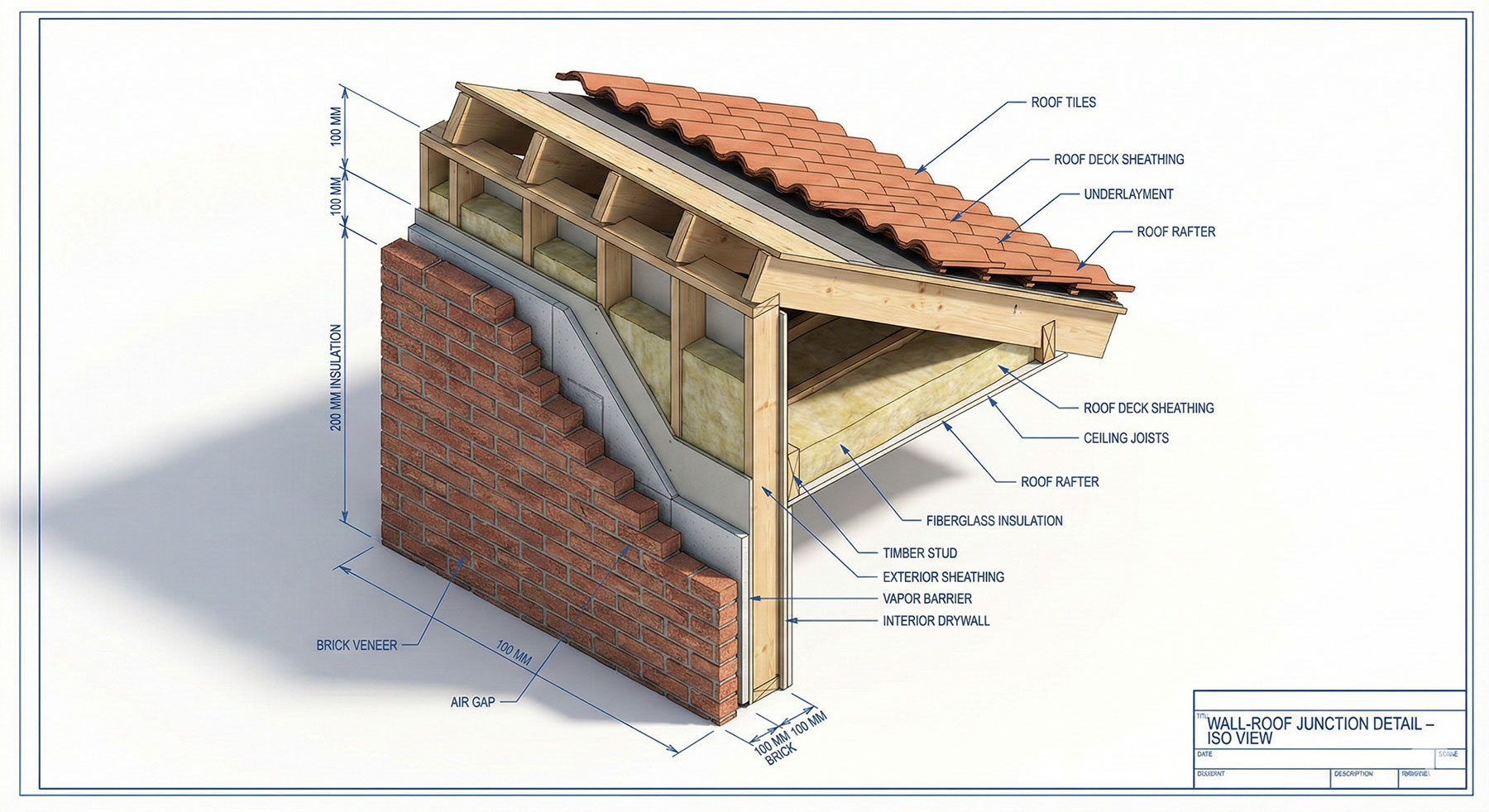
Architectural details are where the building actually gets built. A poorly drawn wall section that misses flashing, insulation, or proper material layering can lead to expensive construction errors and water leaks. Drawing these assemblies requires an understanding of building science and a library of accurate components.
A professional detail tells a story of how materials connect. It’s not just about geometry; it’s about the “order of operations” in construction. Using standard detail blocks for brick ties, insulation, and flashing ensures that your drawings are not only graphically beautiful but technically sound.
Technical Guide: Best Practices for Architectural Details
Details must be clear and legible. Follow these drafting rules:
- Material Hatches: Use specific hatches for specific materials (e.g., Earth, Concrete, Rigid Insulation) and keep them consistent across all details. This visual shorthand allows contractors to read the drawing without reading every note.
- The Waterproofing Line: Always draw the “waterproofing line” (flashing/membranes) as a bold, continuous polyline. This helps you verify that the building envelope is sealed and continuous, preventing water intrusion.
For standard detail references, architects often rely on Whole Building Design Guide (WBDG).
Expand Your Standards Library
Construction details rely on clear communication. Use:
- Linetypes (A2) for hidden blocking and membranes.
- Text Styles (A4) for legible annotations.
Watch: Video Guide to Drafting Standards
Watch this video to learn more about drafting standards for architectural drawings and how to efficiently integrate these blocks and patterns into your daily workflow.
Download the Architecture Details Starter Pack (Free)
To help you work faster, we have created a professional AutoCAD Architectural Detail Pack. It includes wall sections, roof eaves, and foundation details. It is fully layered, purgable, and ready to use.
[Image: Preview of the Wall Section and Roof Details]
Become a Revit & BIM Expert
Ready to move beyond AutoCAD? Check out our Revit Interior Design Course to master BIM workflows.